
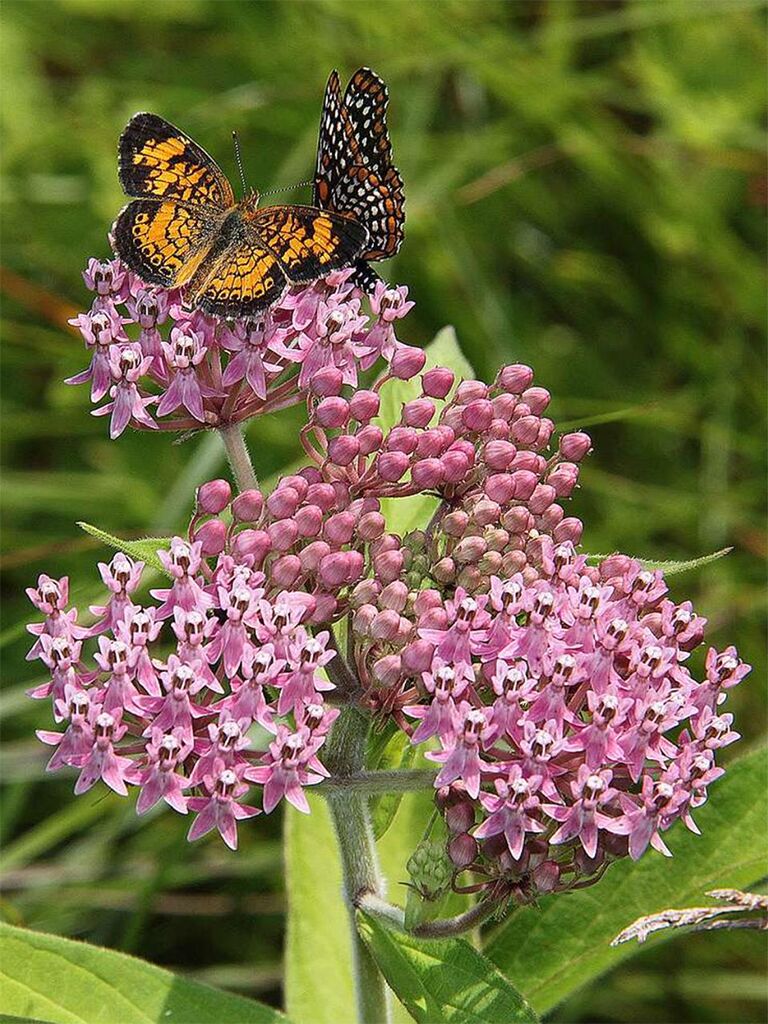
Description
🌿 Why ‘Swamp Milkweed’ Deserves a Place in the Garden
- Pollinator magnet — attracts monarchs, swallowtails, bees, and hummingbirds.
- Native resilience — adapted to North American climates and ecosystems.
- Season-long interest — blooms midsummer, followed by decorative seed pods.
- Moisture loving — thrives in rain gardens and near water features.
- Supports biodiversity — critical larval host for monarch butterflies.
🌞 Care Guide for Garden Success
- Light: Full sun for best bloom; tolerates light shade.
- Soil: Prefers moist to wet soils; tolerates clay if drainage is steady.
- Watering: Keep consistently moist, especially in dry spells.
- Spacing: Plant 18–24 inches apart for good air circulation.
- Feeding: Generally not needed; overly rich soil can lead to floppy growth.
- Maintenance: Cut back in late fall or early spring; collect seeds if desired.
- Wildlife Note: Leaves contain natural toxins that deter herbivores but are harmless to monarch larvae.
🦋 A Garden’s Gentle Guardian
To plant Asclepias incarnata is to welcome life — clouds of butterflies, the hum of native bees, and the shimmering presence of summer’s wild heart. In return for a patch of damp soil and full sun, it offers the gift of beauty and the quiet satisfaction of knowing you’ve helped sustain one of nature’s most awe-inspiring migrations.


Reviews
There are no reviews yet.